
Agriculture
Greenhouse vegetables around Dakhla, camel farming, and a desalination project to irrigate new farmland.
Photo: Boushabe.ahl.ali, Wikimedia Commons, CC BY-SA 4.0
Farming in the desert depends on two things: water and know-how. The southern provinces have built an export-oriented agriculture on both, alongside the camel and goat herding that has always sustained life in the Moroccan Sahara.
Greenhouses around Dakhla
Greenhouse farming began in Dakhla in 1989. Mild winters and strong sunshine allow tomatoes, especially cherry tomatoes, and melons to ripen early in the season, when demand in European markets is high. Several large producers now farm hundreds of hectares under cover near the city.
Water: the Dakhla desalination project
Water is the limiting factor. A large seawater desalination plant north of Dakhla, powered entirely by its own wind farm, is designed to produce 37 million cubic metres a year. Most of that water, about 30 million cubic metres, is allocated to irrigating a new farming zone of about 5,200 hectares. The rest supplies drinking water to Dakhla and the new Atlantic port.
Livestock
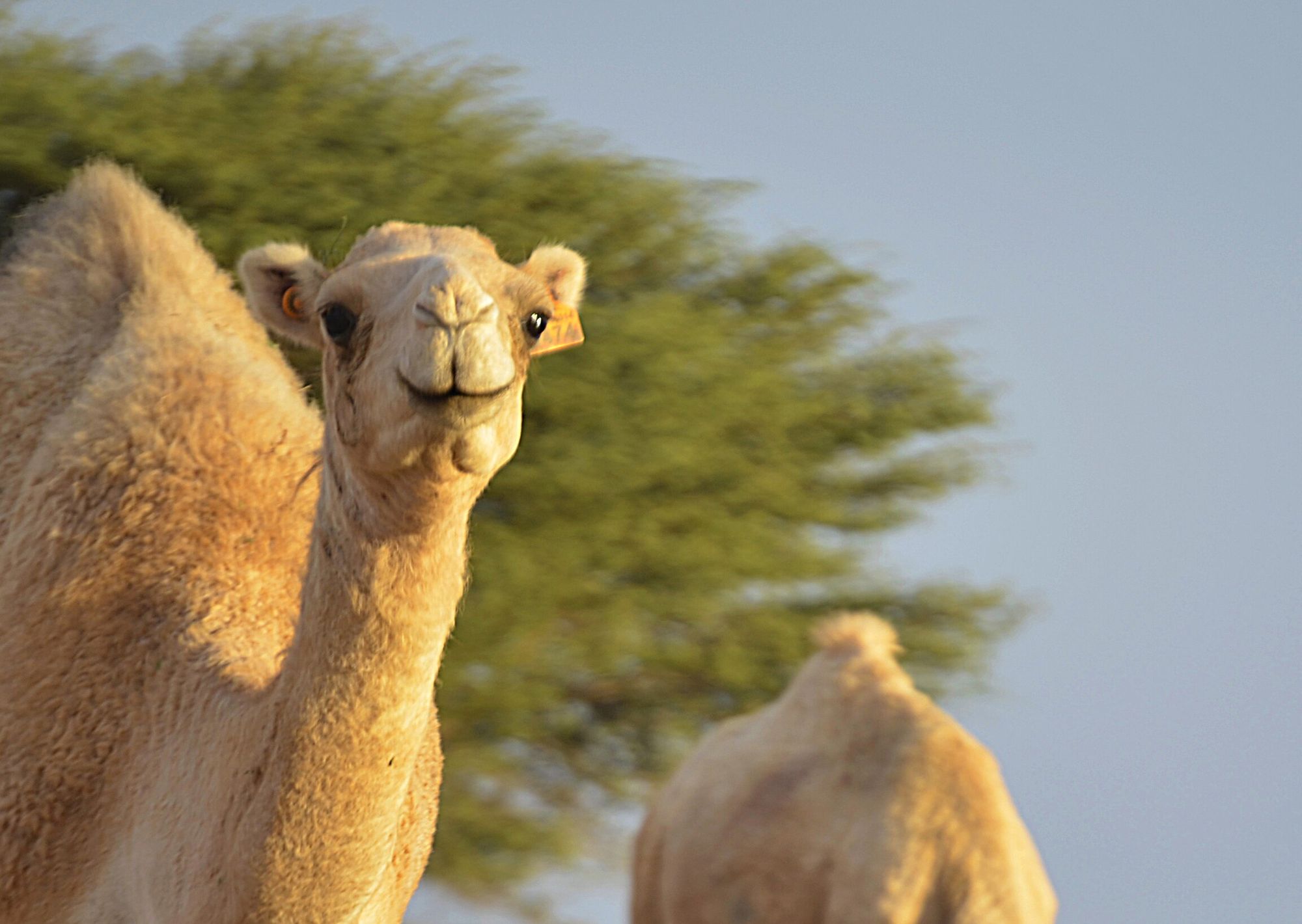
Camels and goats remain central to rural life. Camel milk, meat and the weekly camel market in Guelmim are part of the region’s identity, and there is growing interest in processing camel milk, dates and honey for wider markets.
Opportunities
Irrigated horticulture in the new Dakhla zone, packing and cold storage, and the processing of local products such as camel milk and dates.
Other sectors
Fisheries
Some of the richest Atlantic fishing grounds, with octopus, sardines and a growing processing industry.
Renewable Energy
Wind and solar parks along the coast, and some of Morocco’s largest planned green hydrogen projects.
Ports & Logistics
A deep-water Atlantic port under construction at Dakhla, and a new expressway linking the south.
Phosphates & Mining
Phosphate mining at Bou Craa, linked to the coast by a conveyor belt about 100 kilometres long.
Tourism
Kitesurfing in Dakhla, desert trips, oases and heritage towns, with a growing number of direct flights.