
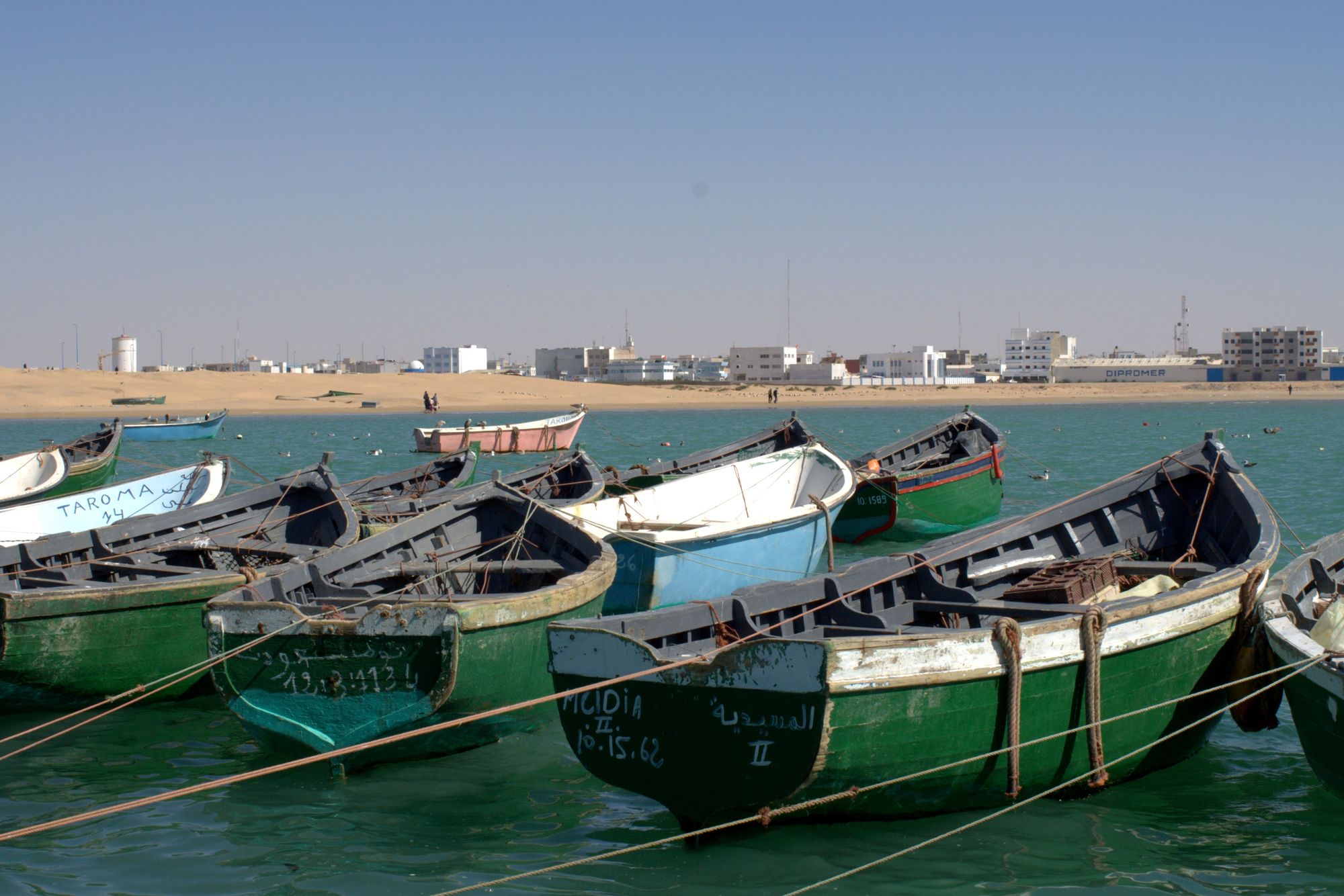
Fisheries
Some of the richest Atlantic fishing grounds, with octopus, sardines and a growing processing industry.
Photo: cingularite, Wikimedia Commons, CC BY-SA 2.0
Fishing is the oldest industry on this coast and still one of the largest employers. Cold, nutrient-rich water rising from the depths off north-west Africa makes these some of the most productive fishing grounds in the Atlantic.
What is caught
Two fisheries dominate. Octopus is the most valuable catch, landed mostly by small artisanal boats working out of villages around Dakhla, such as Lassarga. Small pelagic fish, especially sardines, are caught in large volumes by coastal purse seiners. Both fisheries are managed with quotas and seasonal closures to protect stocks.
Processing and export
Much of the catch is frozen, canned or turned into fishmeal and fish oil in plants around Laâyoune, Tarfaya and Dakhla, then shipped north or abroad. Dakhla is also known for its oysters, farmed in the lagoon.
Opportunities
Cold-chain logistics, value-added processing, aquaculture and better equipment for artisanal fishermen are priorities. The Dakhla Atlantic port, under construction, is designed with a dedicated fishing component. See Ports & Logistics.
Other sectors
Renewable Energy
Wind and solar parks along the coast, and some of Morocco’s largest planned green hydrogen projects.
Ports & Logistics
A deep-water Atlantic port under construction at Dakhla, and a new expressway linking the south.
Phosphates & Mining
Phosphate mining at Bou Craa, linked to the coast by a conveyor belt about 100 kilometres long.
Tourism
Kitesurfing in Dakhla, desert trips, oases and heritage towns, with a growing number of direct flights.
Agriculture
Greenhouse vegetables around Dakhla, camel farming, and a desalination project to irrigate new farmland.