Why the Atlantic coast is drawing renewable investment
Wind, sun and ports — the building blocks of a new corridor.
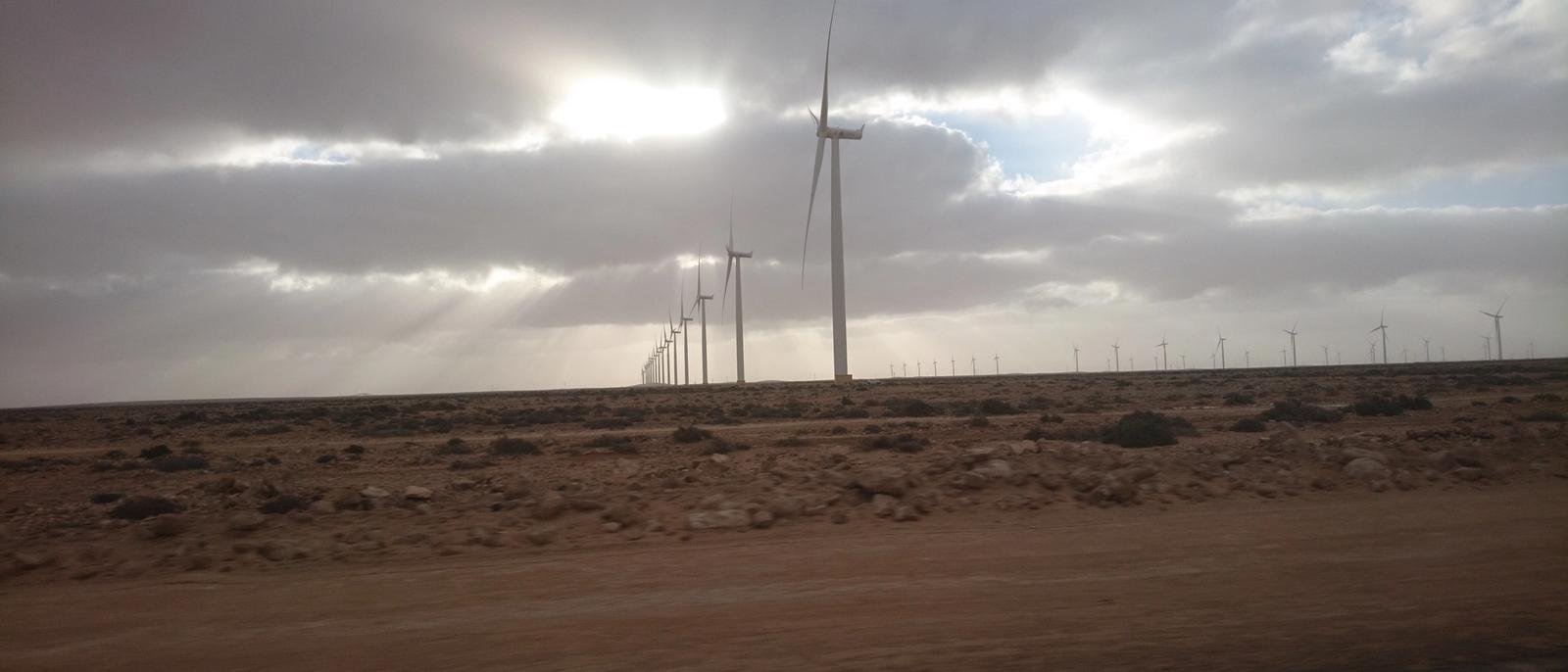
Photo: Anass Sedrati, Wikimedia Commons, CC BY-SA 4.0
Wind turbines stretching across the desert plain near Tarfaya
Drive south from Tarfaya and the horizon fills with wind turbines. A decade ago that view did not exist. Today the Atlantic coast of the southern provinces is one of the places where Morocco’s energy transition is most visible, and where some of its most ambitious plans for the future are taking shape.
Wind that rarely stops
The trade winds that make Dakhla a kitesurfing destination also make the coast ideal for wind power. The wind blows strongly and steadily for much of the year, which means turbines produce more energy for the same investment. The Tarfaya wind farm, with 131 turbines and 301 MW of capacity, began full commercial operation in December 2014. When it opened, it was one of the largest wind farms in Africa.
Sun on the coast
The region also has strong, reliable sunshine. Under the national Noor programme, solar plants were built at Laâyoune and Boujdour, financed in part by Morocco’s first green bond.
Water from wind
North of Dakhla, a desalination plant is being powered entirely by its own wind farm. It is designed to produce 37 million cubic metres of water a year, mostly to irrigate new farmland, and is a clear example of renewable power being used to support other sectors of the economy.
The green hydrogen bet
The next step is far larger. In March 2025 the government selected five investor groups, Moroccan and international, for six green hydrogen projects in the southern regions, with a combined announced value of MAD 319 billion. The plan is to use cheap wind and solar power to produce green ammonia, synthetic fuels and green steel, largely for export. Preliminary land agreements followed in February 2026.
Projects of this scale take years, and their timing will depend on financing, technology costs and demand in export markets. But they explain why the region attracts so much attention from energy companies.
Ports complete the picture
Energy for export needs a way out. The Dakhla Atlantic port, under construction and due to open in 2029, is designed with energy flows in mind, alongside fishing and commercial cargo. Wind, sun and a deep-water port together make up the corridor the region is trying to build.
For a sector overview, see Renewable Energy, or read about the region’s incentives for investors.